School of Civil Engineering · National Technical University of Athens

Dimitrios Sargiotis

Dr Sargiotis is an academic and computer scientist working on artificial intelligence and data governance for the infrastructure of cities. His work asks how cities can hand consequential decisions to computational systems without losing resilience, accountability or fairness, and is released as reproducible open-source software alongside a programme of Springer monographs.

Portrait of Dimitrios Sargiotis

Research

AI, data governance and resilient urban systems, studied through open-source software and three book series.

Cities now hand consequential decisions to software: how traffic is routed and energy dispatched, which bridges and water pipes are repaired before they fail, which neighbourhoods are warned first of a flood, who receives scarce health and public services. His work asks how such systems can be made resilient, accountable and fair, joining forecasting, reinforcement learning and digital twins to the governance of the data on which they depend.
The library

Seventeen monographs

Sole-authored volumes with Springer Nature, 2024 to 2027, eleven of them in three book series on AI and the city.

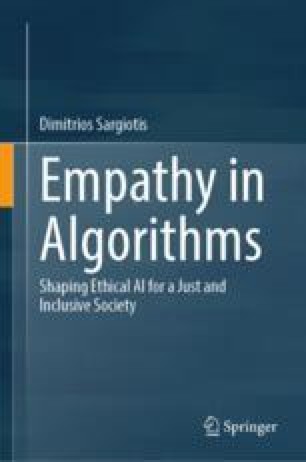
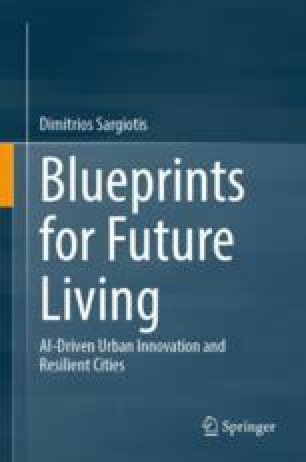
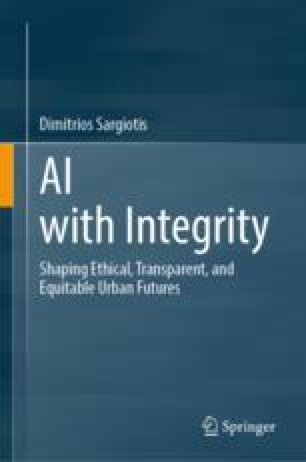
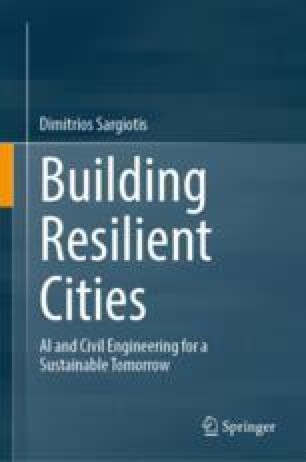
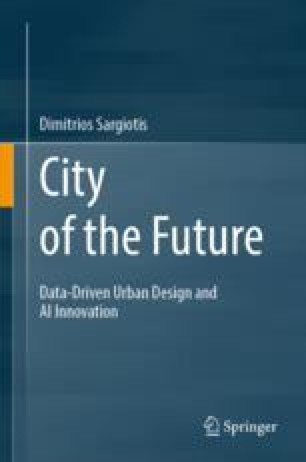
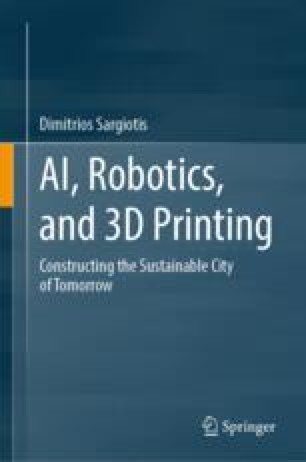
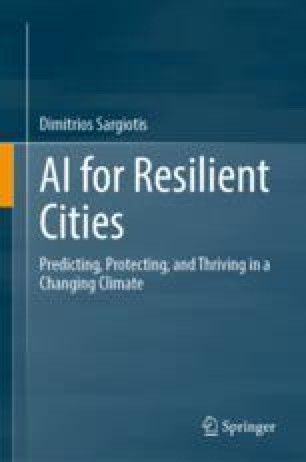
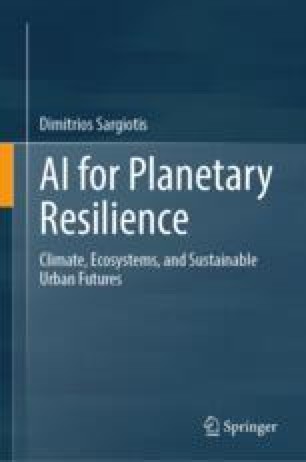
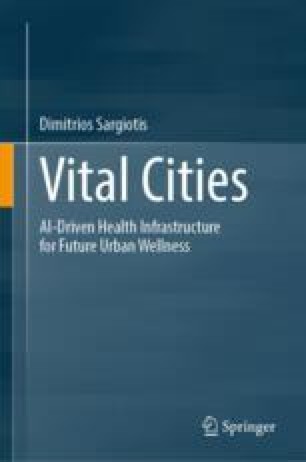
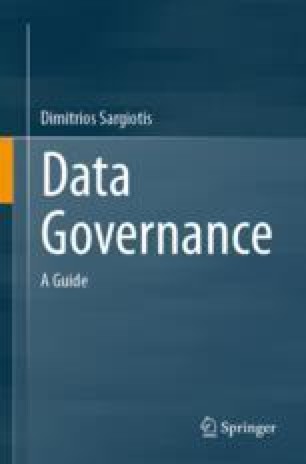
Cover of Data Governance: A Guide2024PublishedData GovernanceA GuideCover of MATLAB for Civil Engineers: From Basics to Advanced Applications2025PublishedMATLAB for Civil EngineersFrom Basics to Advanced ApplicationsCover of Empathy in Algorithms: Shaping Ethical AI for a Just and Inclusive Society2026PublishedEmpathy in AlgorithmsShaping Ethical AI for a Just and Inclusive SocietyCover of Blueprints for Future Living: AI-Driven Urban Innovation and Resilient Cities2026PublishedBlueprints for Future LivingAI-Driven Urban Innovation and Resilient CitiesCover of AI with Integrity: Shaping Ethical, Transparent, and Equitable Urban Futures2026PublishedAI with IntegrityShaping Ethical, Transparent, and Equitable Urban FuturesCover of Urban Harmony: AI-Enhanced Cities for Holistic Health and Well-Being2026ForthcomingUrban HarmonyAI-Enhanced Cities for Holistic Health and Well-BeingCover of Building Resilient Cities: AI and Civil Engineering for a Sustainable Tomorrow2026ForthcomingBuilding Resilient CitiesAI and Civil Engineering for a Sustainable TomorrowCover of City of the Future: Data-Driven Urban Design and AI Innovation2026ForthcomingCity of the FutureData-Driven Urban Design and AI InnovationCover of AI, Robotics, and 3D Printing: Constructing the Sustainable City of Tomorrow2026ForthcomingAI, Robotics, and 3D PrintingConstructing the Sustainable City of TomorrowCover of AI for Resilient Cities: Predicting, Protecting, and Thriving in a Changing Climate2026ForthcomingAI for Resilient CitiesPredicting, Protecting, and Thriving in a Changing ClimateCover of AI for Planetary Resilience: Climate, Ecosystems, and Sustainable Urban Futures2026ForthcomingAI for Planetary ResilienceClimate, Ecosystems, and Sustainable Urban FuturesCover of Vital Cities: AI-Driven Health Infrastructure for Future Urban Wellness2026ForthcomingVital CitiesAI-Driven Health Infrastructure for Future Urban WellnessTBAForthcomingThe Intelligent MetropolisRedefining Urban Life through AI and Personalized ExperiencesTBAForthcomingEngineering the FutureAI's Role in Building Resilient, Smart, and Sustainable InfrastructuresTBAForthcomingAI and the Mobility RevolutionRedefining Urban Transportation for Smart CitiesTBAForthcomingAI and Green InfrastructureRedesigning the Urban Blueprint for a Sustainable FutureTBAForthcomingAI and the Circular CityDesigning Waste-Free Urban Futures
17monographs with Springer Nature
500+citations on Google Scholar
12h-index on Google Scholar
3open-source research repositories, with data and results

Open source

Software and data

All software
2026

FMA-AI: Federated multi-agent AI for energy-aware public transport

MATLAB code, MBTA GTFS data and results, evaluated over 20 seeds on 24 hold-out routes; archived on Zenodo.

2026

AegisOne Guardian: Leakage-resistant evaluation of a static malware classifier

Temporal splits, confidence bounds on false-positive rates and calibration, with an EMBER2024 benchmark.

2026

MATLAB for Smart Infrastructure: Chapter 15 case studies

Digital twin, structural health monitoring, IoT and optimisation scripts from MATLAB for Civil Engineers, validated and archived on Zenodo.

Correspondence

Collaboration, talks and review

dims@central.ntua.gr
↑ ↓ to moveEnter to openEsc to close